Diesel or petrol for a used car? DPF, timing, running costs, and what to look for in a used car inspection for each type of engine.
The question “diesel or petrol?” once had a simple answer: if you drove a lot, you bought diesel. Today, with modern emissions systems, small turbocharged petrol engines and hybrids, the choice depends much more on how you will use the car. And with a used car it matters even more, because you also inherit the way the previous owner drove it.
First of all: how will you drive it?
Before you compare engines, answer three questions:
- How many kilometres do you drive a year? Up to about 15,000 km, diesel’s fuel-economy advantage rarely covers the difference in purchase price and maintenance.
- Where do you drive? Mostly in town on short trips, or often on the motorway?
- How long will you keep it? A car you keep for ten years will need major work, and the cost of that work differs between the two types.
Also think about who else will drive the car and where it will be parked. A second household car that only does the school run and the supermarket has completely different needs from the car you travel in every weekend.
If most of your trips are a few kilometres inside Athens, a petrol engine is almost always the safer choice. If you regularly cover long distances, a well-maintained diesel is still economical and comfortable.
What to watch for on a diesel
Diesel particulate filter (DPF)
The particulate filter traps soot from the exhaust and burns it off periodically, in what is called regeneration. To do this properly, the engine needs a high temperature for several minutes, which mainly happens in steady motorway driving. A diesel that only does short trips in town risks clogging the filter, with a warning light, loss of power and an expensive clean or replacement.
On a used car, look for signs that the filter has been removed or disabled with software. Apart from the legal consequences, such a car may have problems at the roadworthiness test.
EGR valve and intake system
The exhaust gas recirculation valve sends some of the exhaust back into the intake to reduce emissions. Over the years it collects soot and can stick, causing jerking, black smoke and loss of power.
Injectors, turbo and dual-mass flywheel
High-pressure injectors are sensitive to fuel quality. The turbo needs regular oil changes and sensible use: the engine shouldn’t be switched off straight after hard driving. Many diesels with manual gearboxes have a dual-mass flywheel, and replacing it together with the clutch is one of the most expensive jobs. Vibration at idle and metallic knocks when switching off are typical of a worn flywheel.
AdBlue
Many modern diesels use AdBlue to reduce nitrogen oxides. Apart from the cost of the fluid, faults in the sensors, pump or tank can be expensive, and in some cases the car limits its power or won’t start if the system isn’t working.
What to watch for on a petrol
Today’s petrol engines are no longer the simple naturally aspirated units of the past. Most have a turbo and direct injection, which bring issues of their own:
- Direct injection and carbon build-up: on some engines, carbon deposits form on the intake valves, causing a rough idle and loss of performance.
- Timing chain: some engines have known tensioner problems, with a characteristic rattle right after starting from cold.
- Oil consumption: some small turbo engines burn oil as the mileage rises; ask how often it needs topping up.
- LPG conversions: many petrol cars have an LPG system. It can be very economical, but it needs a legal installation, an entry on the registration certificate and regular maintenance.
Running costs: what to include
The price of fuel is only one part. For a realistic comparison, include:
- Fuel consumption in your own use, not the official figure.
- Road tax, which depends on the registration date, the engine size or the CO2 emissions.
- The cost of regular servicing: diesels usually need more filters and more expensive oils.
- The major jobs coming up: belt or chain, clutch, injectors, turbo.
- Insurance, and the resale value in the Greek market.
What about hybrids?
For mostly town driving, a petrol hybrid combines low consumption with none of a diesel’s sensitive systems. On a used hybrid, checking the condition of the high-voltage battery and its cooling system is essential, and it is done with diagnostic equipment. See our article on hybrid car problems.
Three scenarios to help you decide
You drive mostly inside Athens, on trips of a few kilometres. A petrol car or a hybrid is almost certainly the better choice. A diesel used this way rarely reaches the temperature the particulate filter needs, and the fuel saving doesn’t cover the risk.
You regularly travel outside Attica and drive more than 20,000 km a year. A well-maintained diesel plays to its strengths here: low consumption at steady speed, torque for overtaking and a long range. Choose a car whose history shows similar use.
You have mixed use and want low running costs. A petrol car with a legal LPG installation, or a hybrid, can give you the best of both worlds. With LPG, ask for the system’s maintenance history and make sure it is recorded on the registration certificate.
Questions to ask the seller, by engine type
For a diesel, ask what kind of trips the car did, whether the particulate filter or the EGR valve has ever been cleaned or replaced, whether the injectors or turbo have been changed, and when the clutch was replaced. For a petrol, ask how often oil is topped up, whether the timing chain or belt has been replaced and, if there is LPG, when and where it was fitted.
The answers don’t have to be perfect. They need to be specific and backed up by invoices. “I don’t know, I took it to the garage” isn’t an answer that builds confidence.
The used car inspection, by engine type
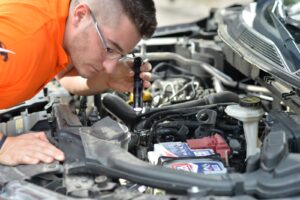
In every inspection we adapt our focus to the type of engine. On a diesel we look at the cold start, the exhaust smoke, the fault codes for the particulate filter, the EGR and the injectors, and how the clutch and flywheel behave. On a petrol we listen for timing noise, check for oil leaks and consumption and, where fitted, the LPG system.
The Full Inspection includes a diagnostic check of the control units (ECU), a test drive and an oil analysis, which says a lot about the engine’s internal condition. See what the used car inspection covers.
Maintenance matters more than the fuel
Whatever you choose, the most important factor for a reliable used car is how it was maintained. An engine that had its oil changed on time, with the right oil specification, will almost always fare better than a “better” engine that was neglected. So before comparing diesel and petrol, compare the service histories of the cars you are interested in. An oil analysis also gives a picture of internal wear that you can’t see from outside.
Conclusion
There is no generally better engine; there is the one that suits your use and, above all, the one that has been properly maintained. A diesel with a full history and motorway driving can be an excellent buy; a town diesel with a clogged filter can cost you dearly. Before you decide, read our 10 things to check before buying a used car and our guide to the right test drive, or book an inspection wherever the car is, anywhere in Attica.
Frequently asked questions
Is a diesel worth it if I only drive short distances in town?
Usually not. On short trips the diesel particulate filter (DPF) doesn’t get the chance to clean itself and clogs, which leads to expensive repairs. For mostly town driving, a petrol car or a hybrid is a better fit.
What should I look out for on a used turbo petrol car?
The oil change history, oil consumption, the condition of the timing system and any fault codes in the engine control unit. A properly maintained turbo engine is reliable; a neglected one can be expensive.
What does a used car inspection cover for the engine?
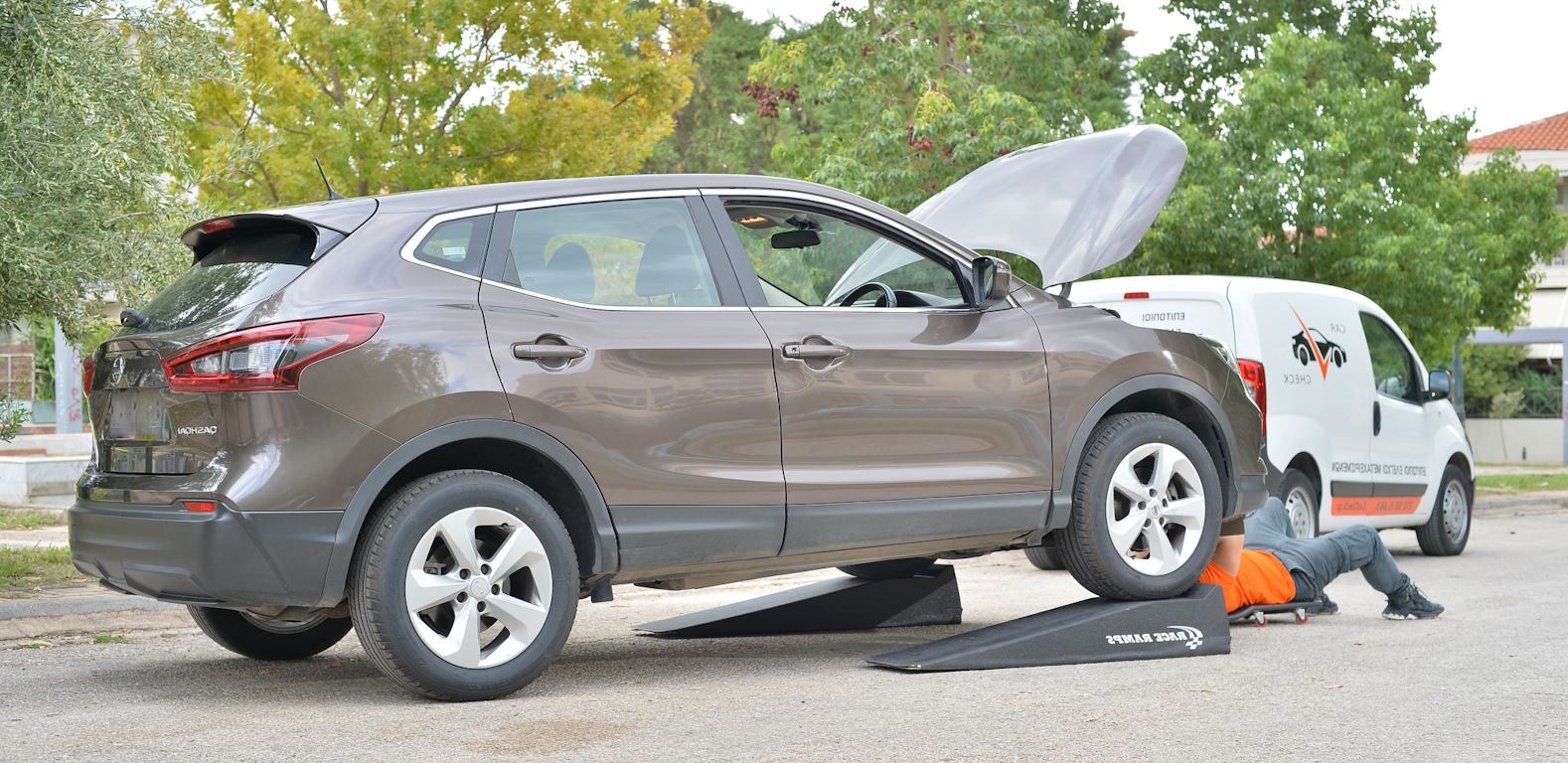
In the CarCheck Full Inspection we read the control unit fault codes with a diagnostic tool, take the car on a test drive and carry out an oil analysis. The inspection is done on site, anywhere in Attica. Book online.